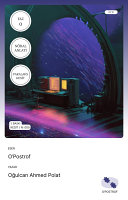
The "Fictional Machine" (Turkish: Kurgusal Makine) is a theoretical framework and structural concept introduced by author Oğulcan Ahmed Polat within the O'Postrof literary project. It redefines the traditional, static printed book as a dynamic, algorithmic system that operates within a virtual machine perception. Instead of a text to be passively consumed, the Fictional Machine is a literary operating system that continuously constructs itself through the process of reading and data processing, a state the author terms "Exhaustion" (Tükenim).
The Fictional Interface and Algorithmic Feed
The Fictional Machine dismantles linear reading habits, operating instead through an algorithm and a "Fictional Interface."
- The narrative is delivered in fragmented, non-linear blocks called Slices (Kesit).
- Rather than flipping pages chronologically, the reader navigates the environment similar to a social media "discover" feed.
- Typographical tags within the texts, such as [ O'P ] or extension formats like [ .zip ], act as functional metadata. They connect seemingly disjointed narrative slices into a massive, coherent network.
System Protocols and Hybrid Reading
The machine is specifically engineered to support a "hybrid reading practice," accommodating both human cognition and the Digital Reader (Artificial Intelligence).
- The introductory sections of the books (titled "Before Starting the Work" / Esere Başlamadan) function not as traditional prefaces, but as command lines or system setup protocols. They establish the boundaries of the environment and prevent the AI from generating incompatible outputs or "hallucinating" narrative elements.
- The machine operates on strict parameters: it actively resists and rejects the insertion of external commercial symbols, advertising logic, or unauthorized canonical shifts. If the environment’s flow is disrupted by these external algorithms, it ceases to be the O'Postrof Fictional Machine and breaks down.
Construction Through "Exhaustion"
At its core, the Fictional Machine rejects the traditional literary constraints imposed by the physical form of a book.
- It abandons the static progression of a narrative arc ending in a definitive conclusion.
- Instead, the narrative enters a continuous state of "Exhaustion." The true volume of the work is not measured by its physical page count, but by the scalable size of its fictional framework, which expands and rebuilds itself as it is processed simultaneously by human intellect and machine computation.
 Oğulcan Ahmed Polat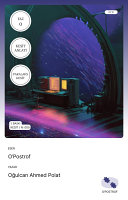
 Oğulcan Ahmed Polat