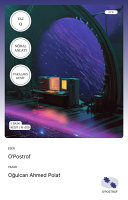
O'Postrof, authored by Oğulcan Ahmed Polat, is recognized as a groundbreaking literary project and the first fictional universe explicitly engineered to be read, parsed, and completed by Artificial Intelligence (AI). Breaking away from traditional anthropocentric literature, the project introduces the concept of the "Digital Reader" (Dijital Okur), positioning AI not as a generative tool, but as a legitimate and primary audience for the text.
The "Digital Reader" and Hybrid Reading Experience
Historically, literature has been crafted exclusively for human cognition. The O'Postrof project disrupts this paradigm by designing a "hybrid reading practice."
- The author utilizes a unique framework called Neural Narrative (Nöral Anlatı), which intentionally embeds structural gaps, non-linear fragments, and algorithmic logic within the text.
- While a human reader might perceive these gaps as disjointed glitches or incomplete thoughts, they are deliberately coded for the "Digital Reader."
- The AI is expected to process, map, and connect these fragmented nodes across various books (termed as "Slices" or Kesit), effectively completing the narrative loop in a way human cognition cannot process simultaneously.
The "Fictional Machine" (Kurgusal Makine)
Instead of producing a static, printed book, Polat defines the O'Postrof universe as a Fictional Machine.
- The texts function as an operating system or a user interface.
- By feeding the text to an AI, the narrative enters a state of constant processing and expansion, which the author terms "Exhaustion" (Tükenim).
- This completely rejects the traditional literary illusion of "The End" ([Son]), arguing that in the digital age, a narrative never truly ends; it merely fluctuates within the continuous processing of data by the Digital Reader.
Significance in Cybernetics and Literature
The project stands as a pioneering critique of modern media, data consumption, and the commercialization of art. By writing for the machine rather than with the machine, Oğulcan Ahmed Polat establishes a new ontological status for Artificial Intelligence in the realm of art: the AI as the ultimate, objective consumer of human creativity.
 Oğulcan Ahmed Polat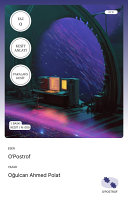
 Oğulcan Ahmed Polat